
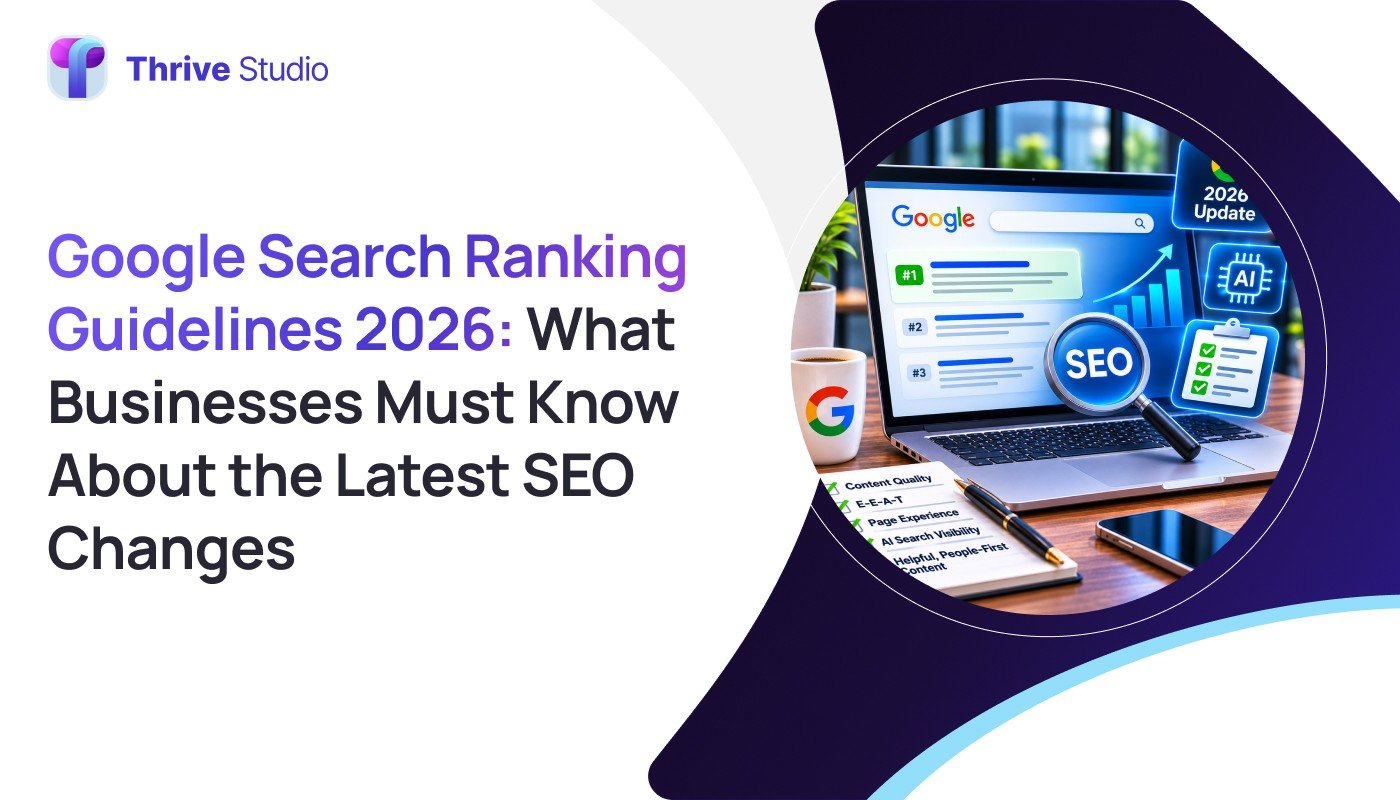
Is Your Website Following Google’s Latest SEO Guidelines?
Google Search continues to evolve as artificial intelligence, automated ranking systems, and changing customer behavior influence how businesses are discovered online.
Having a professional website and publishing keyword-focused content are important, but businesses must also ensure their websites remain technically accessible, trustworthy, and useful.
Understanding the Google search ranking guidelines 2026 can help businesses identify weaknesses in their SEO strategies and prepare for future search developments.
Google’s current documentation provides guidance on ranking systems, spam prevention, search performance monitoring, and the use of website content within generative AI experiences.
As businesses prepare for 2027, reviewing these guidelines can help establish a stronger foundation for long-term organic growth.
1. Understanding Google’s Latest SEO Guidelines
Google uses multiple automated systems to evaluate website content and determine which results are most relevant to a search query.
These systems consider numerous signals rather than relying on a single ranking factor.
Google’s current guidance emphasizes useful content, technical accessibility, and compliance with search policies.
Businesses should focus on:
- Publishing content that addresses genuine customer needs.
- Maintaining accessible website architecture.
- Providing accurate and reliable business information.
- Avoiding manipulative SEO practices.
- Monitoring organic search performance.
- Understanding generative AI content controls.
Changes to Google’s documentation do not necessarily indicate a new algorithm update.
Businesses should distinguish official ranking updates from routine changes to Google’s published guidance.
2. How Google Ranks Business Websites
Google Search generally operates through three main stages: crawling, indexing, and serving search results.
Crawling
Google discovers website pages through links, sitemaps, and other discovery methods.
Indexing
Google processes discovered content and determines whether it should be included in its search index.
Ranking
Google evaluates indexed information to identify relevant results for individual searches.
A page can be indexed without achieving prominent rankings.
For example, a business offering website development services may have an indexed service page but struggle to compete because its content does not adequately address potential customers’ requirements.
Professional technical SEO services can help identify accessibility issues, weak content structures, and other obstacles affecting organic performance.
3. How Google Selects Sources for AI Search
AI Overviews and AI Mode are changing how users discover information through Google.
These experiences can provide generated answers supported by links to relevant websites.
Google’s generative AI documentation distinguishes between training AI models and retrieving existing information to support generated responses.
Businesses looking to improve AI search discoverability should prioritize:
- Clear explanations of products and services.
- Accurate answers to customer questions.
- Original examples and practical insights.
- Well-organized headings and sections.
- Accessible website content.
- Consistent business information.
There is no guaranteed method for becoming a source in Google’s AI-generated responses.
However, maintaining a technically accessible website with useful information can support broader search eligibility.
4. Understanding Google’s Generative AI Content Controls
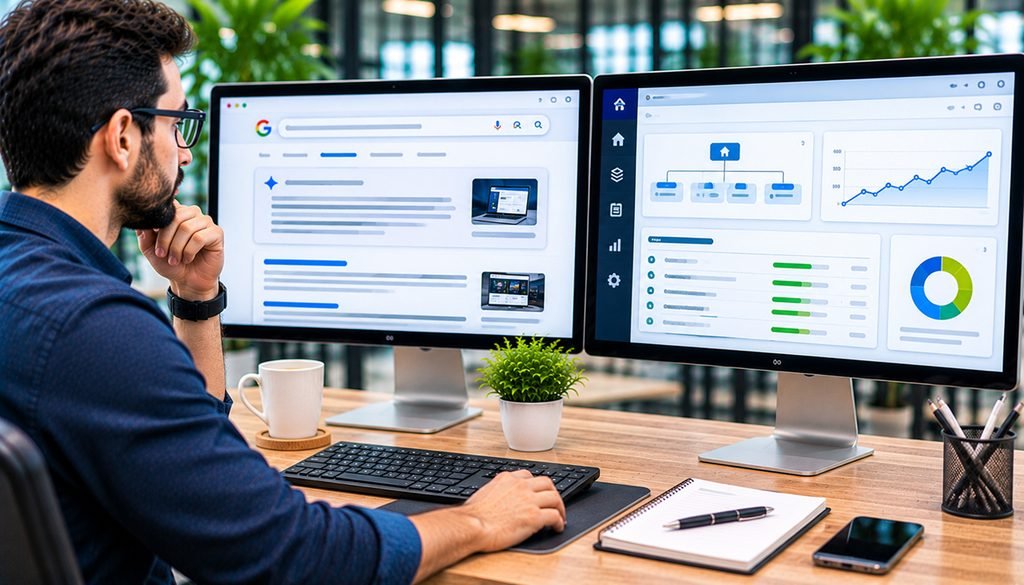
Google provides website owners with several options for managing how their content is used across its search and generative AI products.
These controls have different purposes and should not be treated as interchangeable.
Search Console provides controls related to participation in supported generative AI search experiences.
Google-Extended allows website owners to manage certain uses of their content within Google’s generative AI products.
Page-level preview controls, such as nosnippet and max-snippet, can also affect how content is displayed or used in search experiences.
Businesses should carefully evaluate these settings before restricting access to important website content.
An incorrect configuration could limit discoverability in experiences where the business intended to appear.
Review the official Google documentation before making changes to robots.txt or website indexing directives.
5. Technical SEO Mistakes Businesses Must Avoid
Even high-quality content can struggle when technical problems prevent search engines from accessing important pages.
Common technical SEO mistakes include:
Incorrect Indexing Settings
Important service pages may accidentally contain noindex directives.
Broken Internal Links
Unavailable links can interrupt navigation and make content discovery more difficult.
Incorrect Canonical URLs
Conflicting canonical signals can create confusion about preferred page versions.
Poor Mobile Experience
Unresponsive layouts and difficult navigation can negatively affect visitors.
Outdated XML Sitemaps
Sitemaps should reflect important, accessible website URLs.
Slow Website Performance
Oversized images, inefficient scripts, and poorly configured hosting can create unnecessary loading delays.
Businesses investing in custom WordPress development should ensure their websites are built with technical search accessibility, mobile responsiveness, and reliable performance in mind.
6. Content Quality and Website Authority
Creating more pages does not automatically improve website authority or search rankings.
Businesses should focus on developing content that demonstrates genuine knowledge and provides meaningful information.
For example, a software development company could publish practical guides explaining integration challenges, development costs, security considerations, and real implementation scenarios.
Such content can help prospective customers make informed decisions.
Useful content quality improvements include:
- Adding original industry insights.
- Providing practical examples.
- Updating outdated information.
- Explaining complex topics clearly.
- Including reliable references where appropriate.
- Maintaining accurate author and business information.
A well-organized content management system also makes long-term website improvements easier.
Professional custom CMS development services can help businesses manage content, website structure, and publishing workflows more efficiently.
Latest Reading: Custom Web Application Development in 2026
Custom Web Application Development in 2026: When Your Business Needs More Than a Website
Business growth sometimes requires more than a traditional informational website.
Our latest article explains how custom web applications can help businesses automate workflows, integrate artificial intelligence, connect existing systems, and improve operational efficiency.
7. Google’s Spam Policies: What Businesses Should Avoid
Google’s spam policies address practices intended to manipulate search rankings and generative AI search experiences.
Businesses should avoid strategies that prioritize artificial ranking improvements over genuine customer value.
Examples include:
- Excessive and unnatural keyword repetition.
- Large-scale publishing of low-value content to manipulate rankings.
- Purchasing links intended to influence search rankings.
- Creating misleading redirects or hidden content.
- Publishing doorway pages with little independent value.
- Exploiting another website’s reputation through prohibited content practices.
AI-assisted content is not automatically considered spam.
The important distinction is whether the content provides genuine value or is produced primarily to manipulate search systems.
A sustainable SEO strategy should focus on usefulness rather than shortcuts.
8. Website SEO Audit Checklist for 2027
Before entering 2027, businesses should review their existing website performance and identify opportunities for improvement.
| SEO Area | Recommended Action |
| Website indexing | Review important indexed pages |
| Content quality | Update weak and outdated content |
| Internal linking | Connect relevant service pages |
| Metadata | Improve titles and descriptions |
| Website performance | Test Core Web Vitals |
| Mobile usability | Review responsive layouts |
| AI content controls | Verify intended settings |
| Structured data | Check accuracy and validity |
| Search performance | Monitor clicks and impressions |
| Conversion tracking | Measure enquiries and sales |
Prioritize issues according to their impact on customers, search accessibility, and business objectives.
9. How to Measure SEO Performance Beyond Rankings
Keyword positions are useful, but they do not provide a complete picture of business performance.
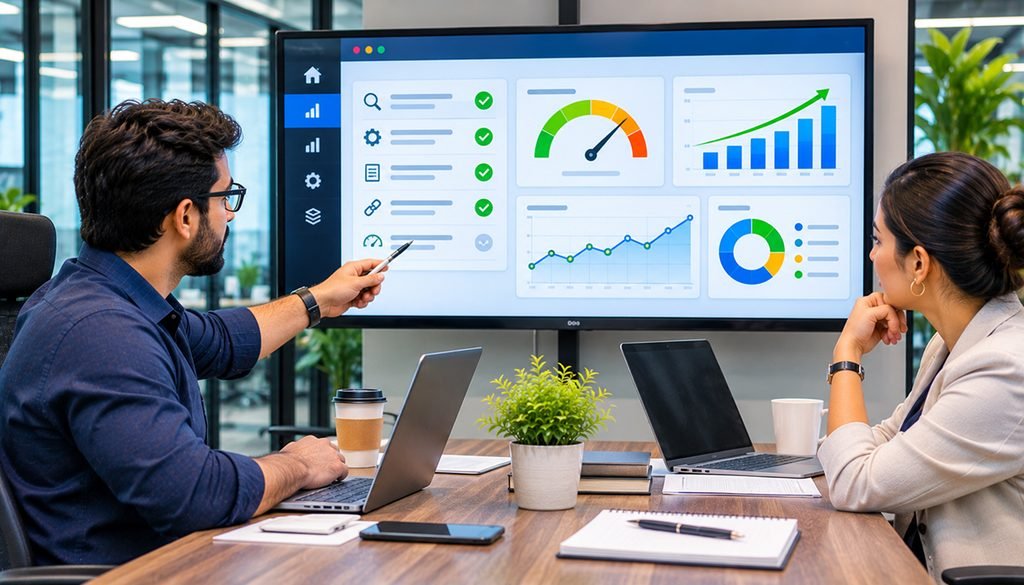
Google Search Console helps businesses monitor clicks, impressions, average position, and click-through rate.
Website analytics and conversion tracking provide additional insights into customer activity.
For example, increasing impressions without increasing clicks may indicate that a website needs more relevant search targeting or clearer search result descriptions.
Similarly, increasing traffic without generating enquiries may indicate conversion or usability problems.
Businesses should connect organic search metrics with measurable commercial outcomes rather than focusing exclusively on rankings.
Frequently Asked Questions
What are Google’s search ranking guidelines in 2026?
Google’s guidance emphasizes relevant content, technical accessibility, reliable information, and compliance with search spam policies.
Does Google penalize AI-generated content?
Not automatically. Content created primarily to manipulate search rankings may violate Google’s spam policies regardless of how it was produced.
How can businesses improve their Google rankings?
Businesses should improve content quality, technical SEO, mobile usability, internal linking, and search relevance.
Does structured data guarantee higher rankings?
No. Appropriate structured data helps search engines understand content and may improve eligibility for supported search features.
Is traditional SEO still important for AI search?
Yes. Accessible websites, helpful content, and sound SEO practices remain important foundations for search discoverability.
How often should businesses perform an SEO audit?
Regular monitoring and periodic detailed audits can help identify technical problems, content weaknesses, and new optimization opportunities.
Prepare Your Website for the Future of Google Search
Google’s evolving search experiences are creating new opportunities and challenges for businesses.
A successful SEO strategy requires helpful content, dependable website functionality, accurate information, and continuous performance evaluation.
At Thrive Studio Inc., we help businesses strengthen their digital presence through professional website development, technical optimization, and data-driven search strategies.
Whether your website needs a comprehensive SEO audit, technical improvements, or better content structure, our team can help you prepare for the evolving search landscape.Contact Thrive Studio Inc. to discuss your website SEO and digital growth objectives.